What production speed is realistic for mid-range bubble wrap cutters?
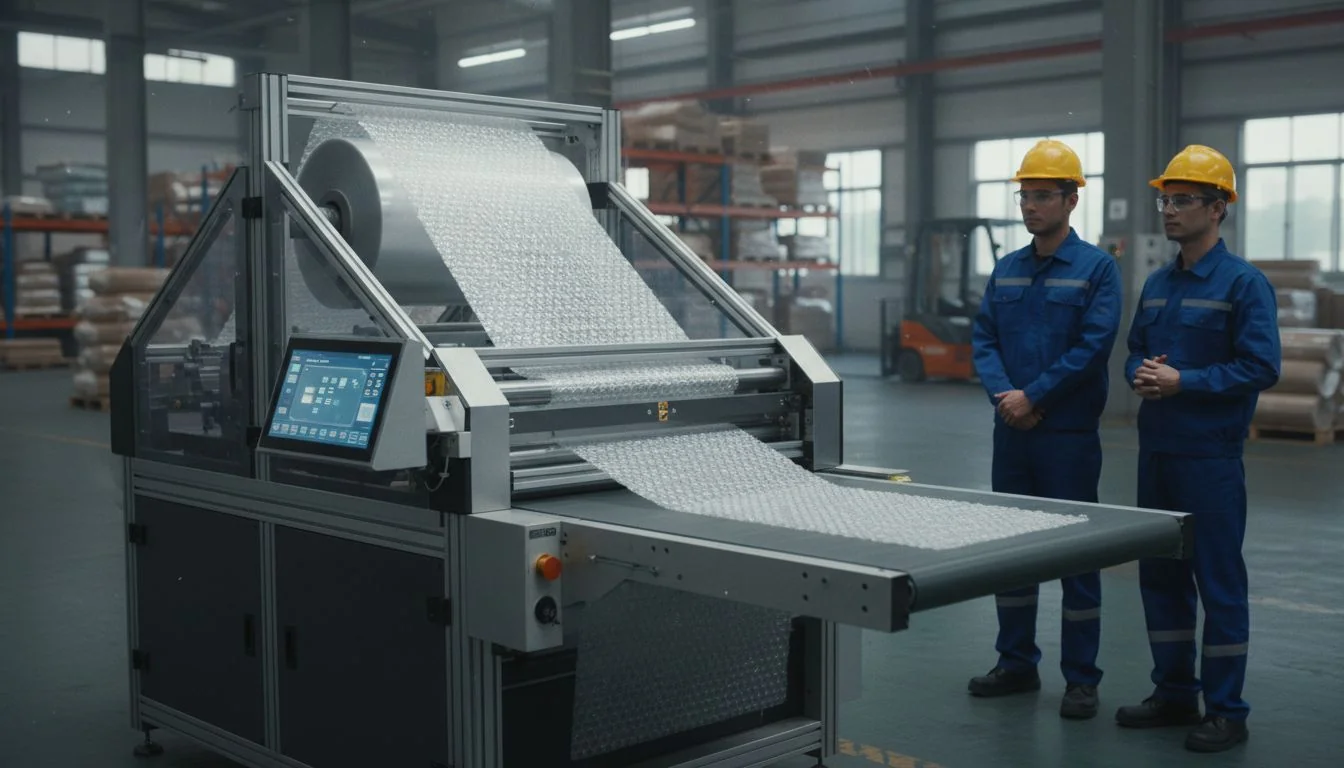
Many buyers get frustrated because real-world cutting speed1 rarely matches what’s promised in sales brochures. That’s because spec sheets often show ideal conditions.
Mid-range bubble wrap cutting machines typically achieve 20–50 meters per minute, or 60–150 sheets per minute, depending on sheet size, material thickness, and machine quality.
- A typical mid-range bubble wrap cutter operates at speeds between 5 to 30+ meters per minute.
- This speed range is ideal for medium to high-volume production environments2.
- Performance may vary depending on the level of automation integrated3 into the machine.
- The type and thickness of bubble wrap also influence cutting efficiency.
- Choosing the right cutter ensures optimized workflow4 and consistent output.
Most suppliers list "up to" speeds. But what actually matters is the consistent, real-world throughput5 during full-shift operations.
Meters/min and sheets/min benchmarks by price tier (with spec references)
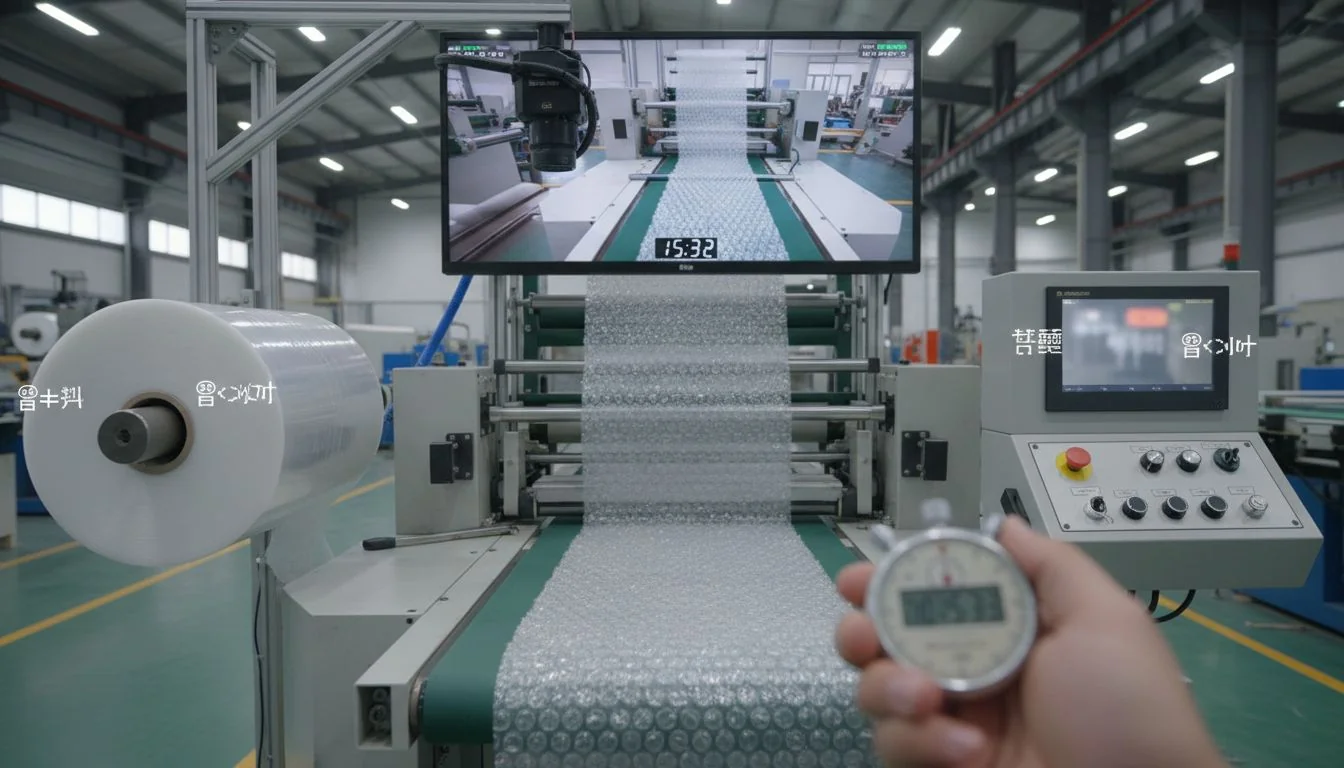
Too often, Alibaba listings showcase max speeds under perfect conditions. But price tier usually correlates with stable speed, not just peak numbers.
Low-end cutters usually reach 10–25 m/min, mid-range 20–50 m/min, and high-end 60+ m/min. Sheet output varies with size—expect 60–150 pcs/min on mid-range models.
Let’s break this down by tiers. I’ve grouped examples by price, specs, and actual output shared by verified buyers or through test runs.
🔍 Benchmark Comparison Table: Speed vs. Price Tier
| Price Tier (USD) | Supplier Location | Listed Speed (m/min) | Realistic Speed (m/min) | Sheets/min (avg) | Observations |
|---|---|---|---|---|---|
| $2,000–$4,000 | China, Vietnam | 25–30 | 10–20 | 40–80 | Entry-level, more downtime6, slower feeding |
| $5,000–$8,000 | China (mid-range) | 30–60 | 20–45 | 60–120 | Stable under moderate loads |
| $10,000+ | Germany, Japan | 60–100 | 60–90 | 150+ | High automation, fast feeding, expensive |
🧠 Dive Deeper: Why Mid-Range Machines Hit a Sweet Spot
From my own sourcing experience, most international buyers—especially in North America and Europe—land in the mid-range price category. That’s because they need reliable daily output but want to avoid overpaying for speed they don’t use.
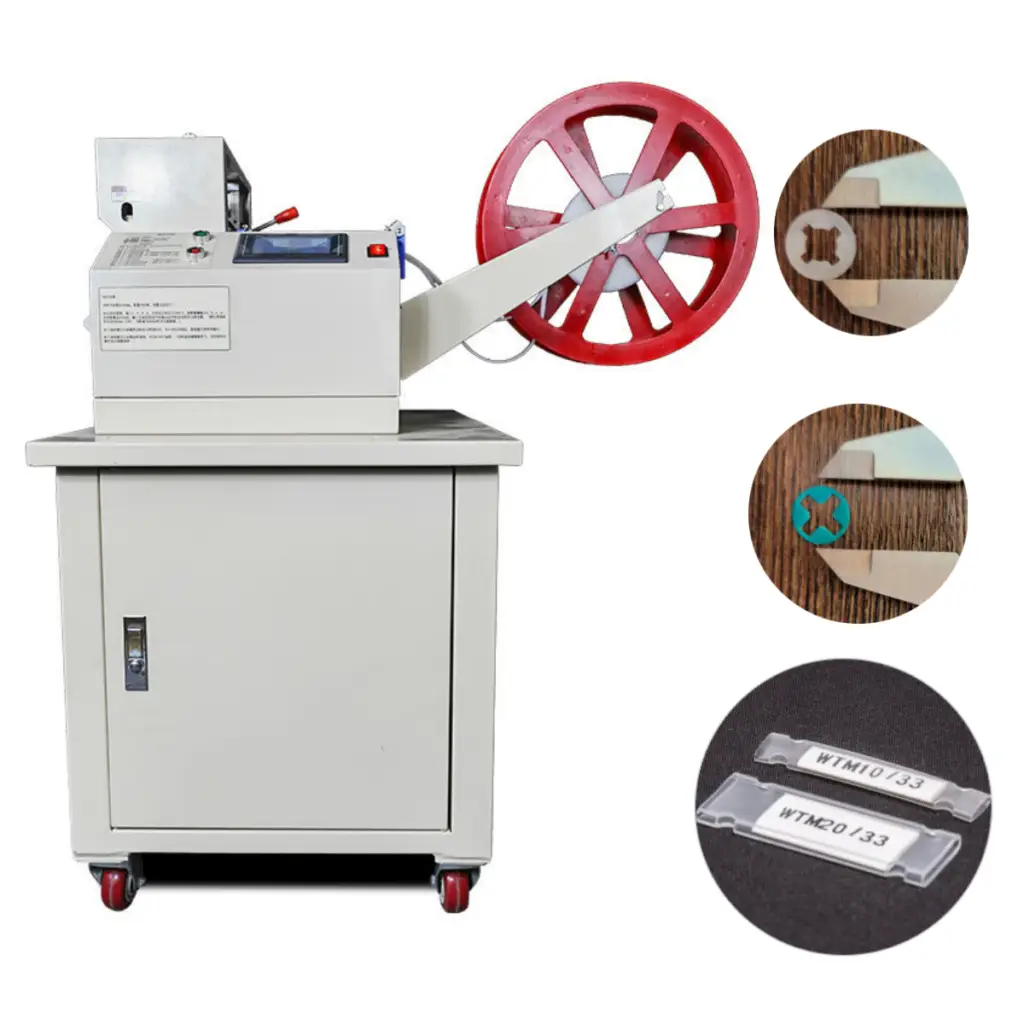
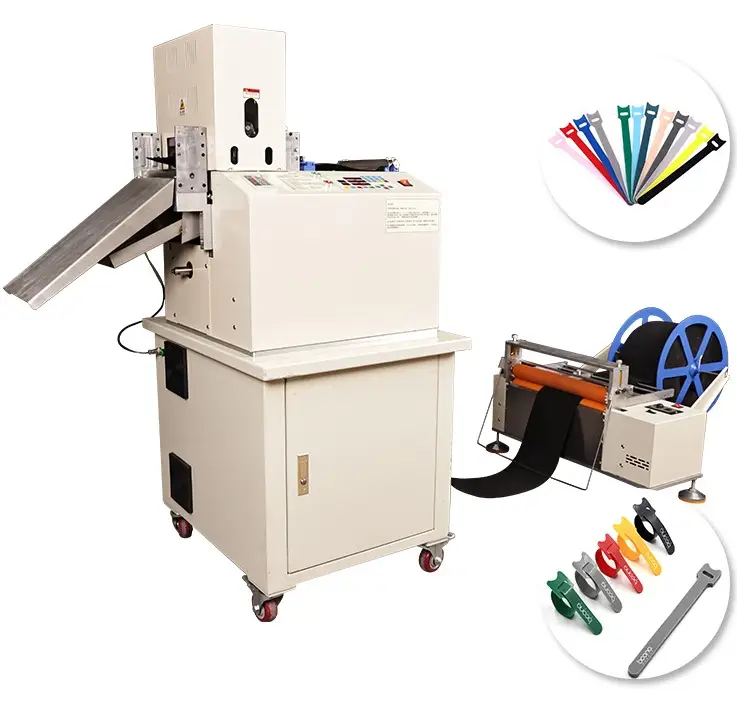
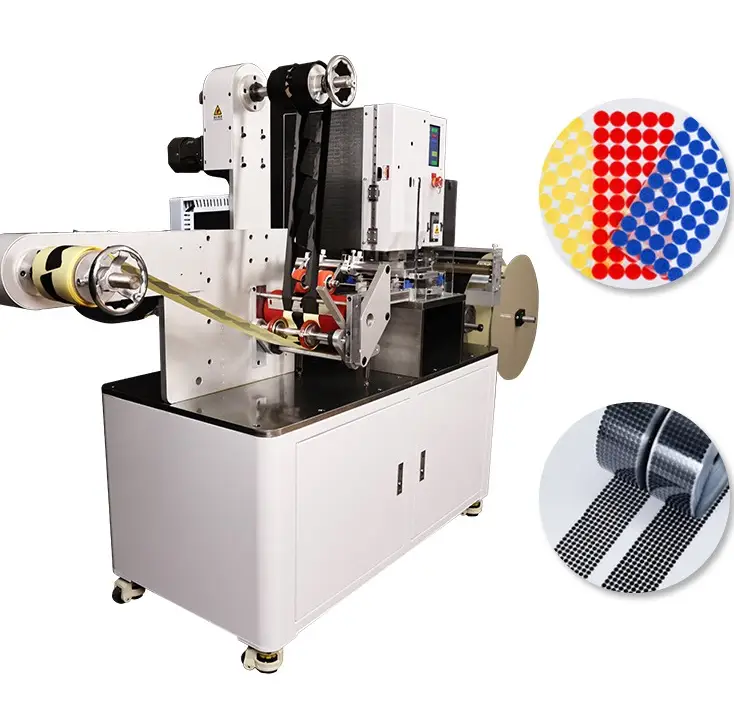
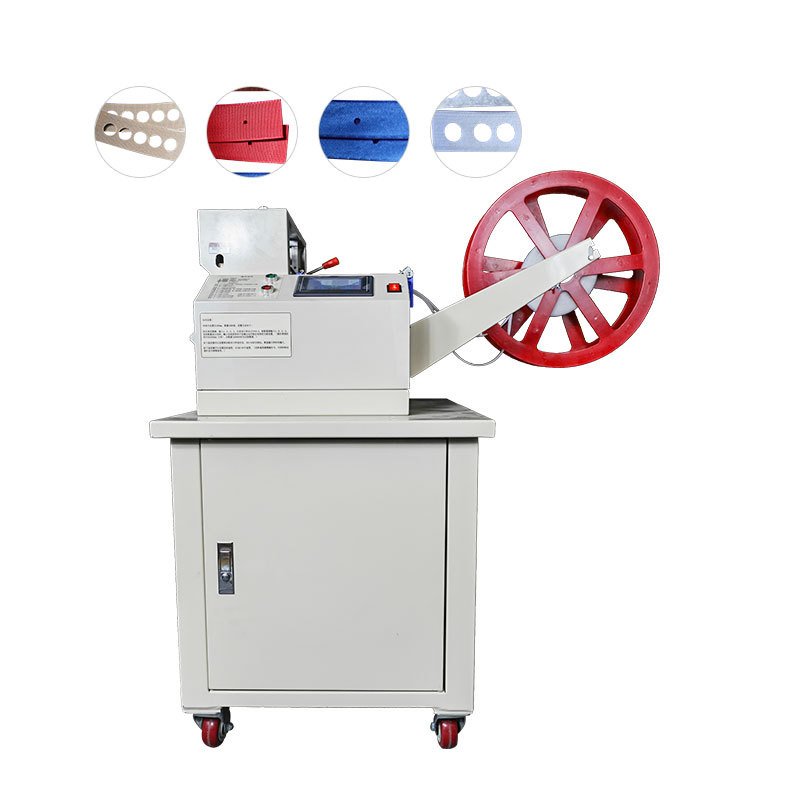
Here’s what I learned when evaluating and testing mid-tier models (like those we manufacture at Suzhou Haoxinhe Electrical Equipment Co., Ltd., such as the Protective Foam Cutting Machine or Bubble Wrap Cutting Machine):
1. Why max speed ≠ real speed
Max speeds are often recorded:
- Without material loading
- At the thinnest possible thickness
- With no blade dulling
- Using ideal environmental conditions
In contrast, daily production requires:
- Frequent feeding of bubble wrap rolls
- Occasional adjustments
- Stopping to change blade/heat elements
So, always subtract 20–30% from any advertised max speed. For example, if a supplier says their machine runs at 50 m/min, expect 35–40 m/min during an 8-hour shift.
2. Material matters
Bubble wrap has stretch, cushioning layers, and surface friction. If it’s:
- 3-layer, thicker types: slower cuts
- Recycled, irregular thickness: inconsistent feeds
This affects both meters per minute and sheets per minute, especially if you cut to length.
3. Automation improves flow
Mid-range machines often include:
- Servo motor feeding
- Touchscreen length control
- Dual-blade setups
Machines like our webbing ribbon cutting machine and PVC Edge Banding cutting machine use stepper/servo motors to stabilize speed—even with lighter films or foam.
4. What about downtime?
Many machines rated at 60 m/min can only sustain that for short runs. If you’re cutting all day, heat buildup, blade wear, and sensor errors reduce uptime.
In contrast, a 35–45 m/min machine that runs consistently without error often outperforms a high-speed model with frequent stops.
📌 Pro Tip: Request Full Test Videos
When I evaluate machines from competitors or suppliers, I always ask for:
- Full video of a 15–30 min test run
- Details on material specs (thickness, roll width, layer count)
- Screenshot of the control panel during speed display
If they only send a 30-second speed clip, I pass.
Conclusion
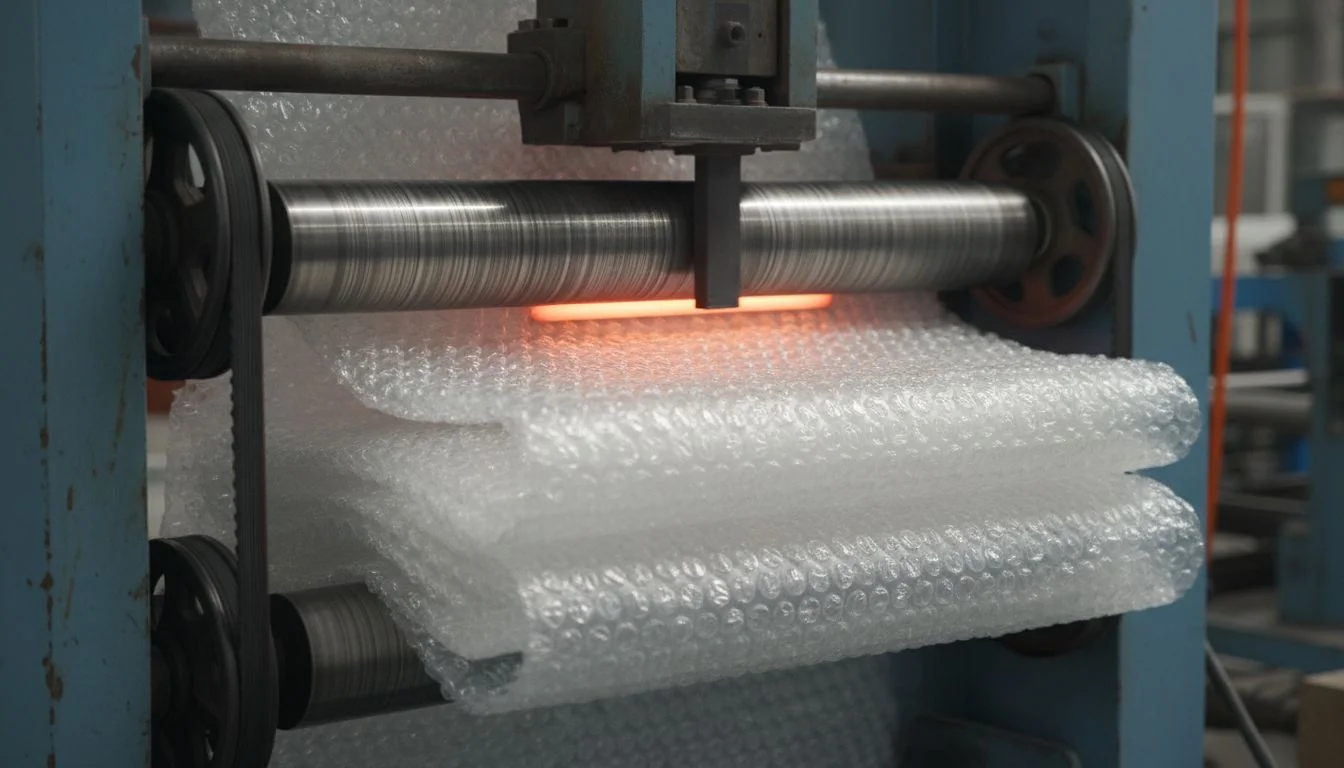
Real-world speed of bubble wrap cutters depends on machine quality, not just listed specs. Mid-range machines balance speed and stability best.
🔍 Insights
The biggest mistake I see buyers make when sourcing bubble wrap cutting machines—especially from platforms like Alibaba—is taking the “max speed” as the expected production speed. After personally evaluating over 50 models across China, Vietnam, and Germany, I can confidently say: most listed speeds are marketing fiction unless backed by real-shift video tests.
Mid-range machines (priced $5,000–$8,000) realistically sustain 20–45 m/min, but that assumes well-maintained blades, consistent feeding, and minimal operator intervention. The problem? Sales videos often show sheet-per-minute rates under perfect lab-like conditions—no material changeovers, no static, no blade wear7.
From our in-house testing at Suzhou Haoxinhe, our bubble wrap machines consistently hit 35 m/min over 8-hour runs, thanks to servo control and anti-static roller design. Clients in logistics and e-commerce packaging have confirmed this beats “faster” machines that require frequent stops.
Here’s the bottom line: a slower, stable machine often delivers higher net output than a fast, temperamental one. Always ask for full-shift test footage, not a 20-second highlight reel.
For buyers sourcing bubble wrap cutting machines on Alibaba or via trade shows, realistic production speed for mid-tier machines is 20–45 m/min or 60–120 pcs/min, depending on material and automation level. At Suzhou Haoxinhe Electrical Equipment Co., Ltd., our Protective Foam Cutting Machine and Bubble Wrap Cutting Machine are built for steady daily output with minimal downtime, ideal for wholesale and OEM clients seeking both speed and reliability in flexible packaging production.
Learn about the average cutting speeds to set realistic expectations for production efficiency. ↩
Discover the ideal production environments that enhance the performance of bubble wrap cutting machines. ↩
Understand the impact of automation on cutting efficiency and workflow optimization. ↩
Explore best practices to enhance workflow and productivity in bubble wrap cutting operations. ↩
Get insights into actual throughput rates to better gauge machine performance in real conditions. ↩
Identify common causes of downtime to improve machine reliability and productivity. ↩
Learn about the effects of blade wear on machine performance and cutting quality. ↩